

Special formwork from PASCHAL for the revitalisation of a power station: The Happurg pumped storage plant is being modernised
When it comes to energy, Germany is dependent on other countries, and electricity and gas prices have skyrocketed since 2022. Many energy experts are therefore recommending that Germany should become more independent in order to be better prepared for times of crisis. Pumped storage power plants, in which large quantities of electricity can be stored, offer one possibility. In Happurg, Bavaria, work is currently underway to get the decommissioned plant up and running again, which has been shut down since 2011 due to damage to the upper reservoir. Electricity for around 160,000 people can then be stored there. Water from Lake Happurg is pumped up into the upper reservior and in times of little solar radiation or wind, the stored electricity can be generated again by discharging the water through turbines.
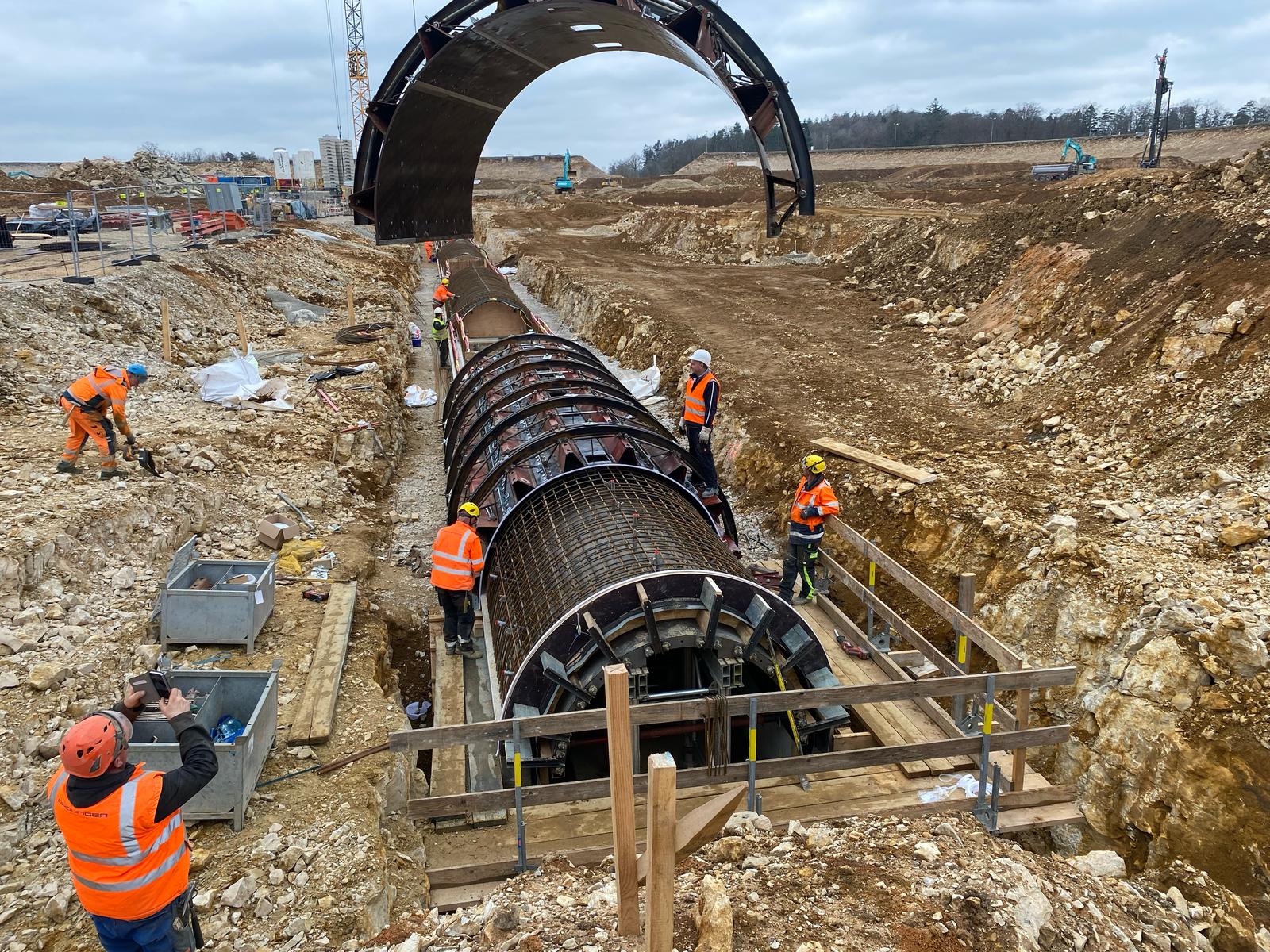
 A total of 54 formwork panels with lengths between 4.00 and 12.00 metres were planned. Thanks to the castors under the shoring system, the formwork could be moved effortlessly by hand – highly effective as the ground is almost level.
Tunnelling under the upper reservoir: An infrastructure project with special requirements
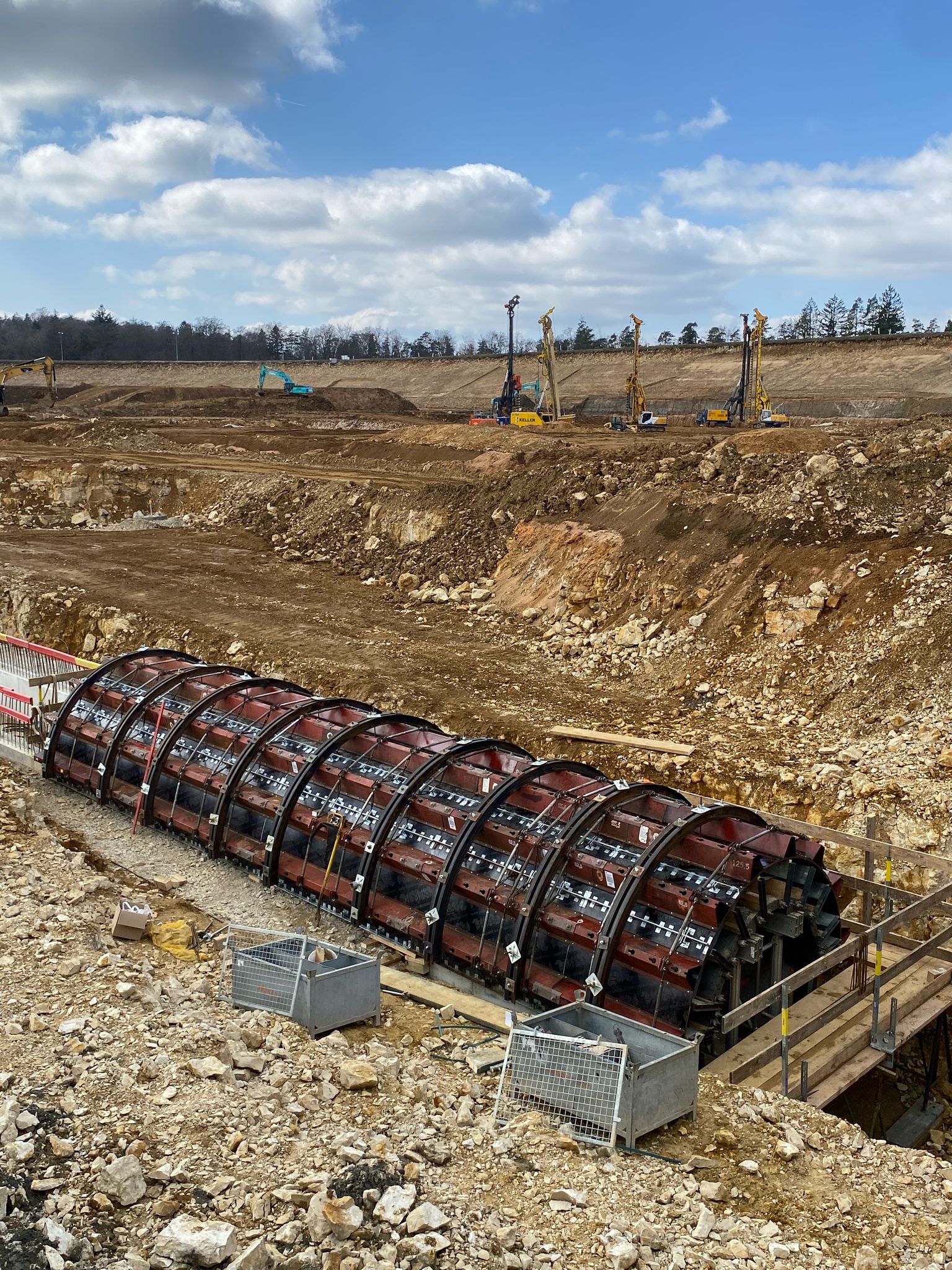
As part of this huge construction project, an inspection tunnel with a length of 530 metres in in-situ concrete is also being built under the entire reservior, for which the formwork manufacturer PASCHAL from Steinach supplied the formwork and supporting structure. Construction began in December 2024 and is expected to be completed in March 2026.
According to site manager Stefan Louen, the construction company Josef Rädlinger Ingenieurbau GmbH from 94575 Windorf, Germany, has been a PASCHAL customer for many years and has already successfully completed various projects in the field of special formwork construction.
'Due to the length of the inspection corridor and the large number of almost identical sections, it was necessary to consider how to optimise the construction process before work began in order to make production as fast, consistent in quality and easy to manage as possible. With the benefit of intensive coordination with PASCHAL and fine-tuning of the formwork at the factory during an on-site visit, we were able to find solutions for our requirements and achieve a good result. We would like to emphasise the solution-oriented approach, which was also demonstrated at several construction site meetings to find joint technical solutions,' says site manager Louen.
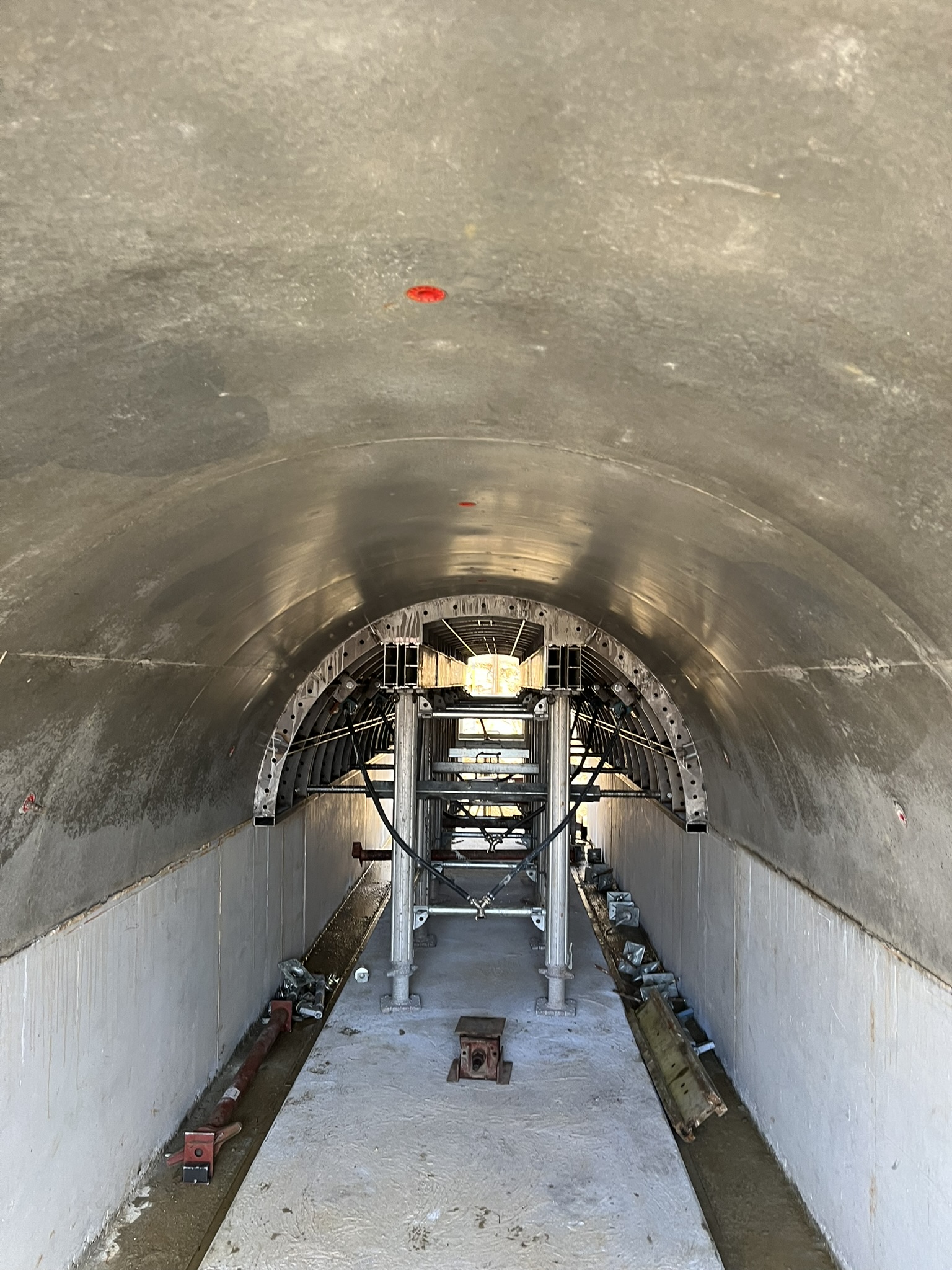
 Once the floor slab had been poured, the 1.00-metre-high side walls followed. The end is formed by the semi-circular tunnel arch with a diameter of 2.20 metres. All components are 40 cm thick. The inner formwork was designed as special steel formwork with joints – for easy dismantling and lowering. The GASS shoring with standard parts was used as the substructure, as was the trapezoidal girder formwork for the outside.
Construction stages and formwork solution in detail
Once the base slab had been constructed, the 1.00-metre-high side walls were built in the second concreting section before the semi-circular tunnel arch with a diameter of 2.20 metres was finally put in place. All components had a thickness of 40 cm. The inner formwork of the arch was developed by PASCHAL as special steel formwork, which was equipped with joints for dismantling and lowering. Props, frames and yoke beams from the GASS shoring system – which can be hired as standard parts – were used as the supporting substructure, as was the radius-adjustable trapezoidal girder formwork, which served as external formwork. The inner and outer formwork was braced together, and concreting openings were installed at regular intervals in the segments of the outer formwork for pouring the concrete. With the formwork, 54 panels with lengths between 4.00 metres and 12.00 metres were planned. It was moved and manoeuvred by lowering it onto castors mounted under the shoring. As the tunnel is nearly always built on almost level ground, the formwork could be moved completely by hand without any additional technical aids.
'After completion, the inspection corridor will run under the future reservior floor. Drainage pipes, which are laid under the reservior sealing level, are connected to this corridor. This makes it possible to check and localise whether and where water losses are occurring in the reservior,' says site manager Louen.
Once all the work has been completed, the decommissioned plant in Happurg is expected to be up and running again in 2028. And the upper reservoir, will again function as the largest electricity storage system in Bavaria. A prime example of sustainable energy generation, well thought-out engineering and successful co-operation with PASCHAL.